How to select books for your school library: a practical guide for teachers and librarians
Building a school library collection is one of the most rewarding and potentially overwhelming tasks a teacher or librarian can take on. With thousands of new titles published every year and budgets that never seem to quite stretch far enough, knowing where to start can be like looking for a needle in a haystack.
The library should be more than a room of books; it is the opportunity for a young person to find their story, to open doors to lives and worlds they never imagined. The choice of books shows children that they each matter and that they belong, whether it's the child who hasn't found the right book yet or the voracious reader who has read everything!
Our friends at the charity Read for Good share their top tips to help you build a collection that keeps children coming back to the library over and over again.
All photos © Read for Good®
1. Include own-voice stories.
Make sure you have titles by authors from a range of ethnicities, religions, family structures and cultural backgrounds. Own-voice stories can enrich children's understanding and build empathy.

2. Reflect your school community.
Choose books that mirror the backgrounds, cultures and experiences of your young people. Children who see themselves in books are more likely to become readers.

3. Don't shy away from difficult themes.
Include books which tackle difficult subjects such as grief, conflict, mental health and injustice.

4. Balance fiction and non-fiction.
A strong non-fiction area can support curriculum and appeal to young people who prefer facts to stories.

5. Prioritise recent books.
While there's always room for some classics and contemporary favourites, prioritise books published in the last five years; these are likely to appeal to young people now and reflect their experiences.

6. Include lots of variety.
Short stories, joke books, audio, poetry, hi-low books, multilingual titles... these all add to the richness and choice for children. Plus, don't forget that picture books and graphic novels are powerful for all ages.

7. Get your young people involved!
Ask children at your school what they would like to read; they are much more likely to read books they helped choose, and it helps them feel part of the library space.

8. Check out reviews first.
A quick review before buying could save precious budget. Try Read for Good's Books We Love, The Guardian children's books section, Books For Topics or School Reading List.

9. What's already popular?
Look at the most loved books in your library to help you get an idea of what young people are enjoying – or not!

10. Longlists are your friend.
With a variety of children's book awards for all ages, it is worth looking over the longlists. The Lollies for funny books, The Carnegie Medal for middle grade and illustrated fiction, The FCBG Children's Book Award for books chosen entirely by children, CLiPPA for poetry, and The Diverse Book Awards and The Jhalak Prize for the best of the diverse voices published in the UK & Ireland.


About Read for Good
Read for Good is the national reading for pleasure charity. They work with schools and hospitals to unleash the life-changing power of books and stories in children. They do this through their initiatives – Readathon®, Track My Read®, Brilliant Box of Books, Read for Good in hospitals – and their Events Programme.
Reading for pleasure changes a child's life. It's a matter of social justice – because children and young people who read for pleasure are more likely to do well at school, have jobs they love, be happy and lead fulfilled lives. And all thanks to the magic of a humble book or story.
About us
Thank you for helping us support reading for all!
By choosing National Book Tokens, you're supporting our work with literacy charities and prizes.
Gift cards
Give a gift beyond words for any occasion
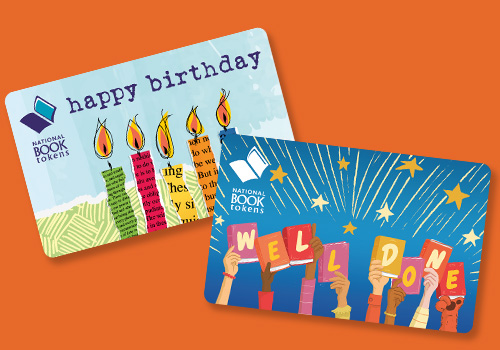
There's a National Book Token for every reader and for every occasion, from birthdays to Bat Mitzvahs.
Discover
Discover brilliant books for children
Browse book recommendations, activities and quizzes for young readers, plus win exciting prizes!


